DEPTH: 4
ACTING: 4
PLOT: 5
ORIGINALITY: 4
PRODUCTION: 5
ENTERTAINMENT: 5
DEMAND ON VIEWER: Moderate to High (extended dialogue featuring complex poetically styled sentences of Cormac McCarthy; judging by the comments posted to the Ridley Scott interview below, this artfulness was lost on some viewers. Very violent and disturbing images, including beheadings, not suitable for the young or impressionable.)
OVERALL: Recommended
OVERALL: Recommended

This film is a joining forces of two names of wide achievement: Ridley Scott and Cormac McCarthy. Scott's films include Alien, Promethius, Black Hawk Down, and Blade Runner.
McCarthy's books include The Road, No Country for Old Men, Child of God, The Passenger, and All the Pretty Horses
***
***
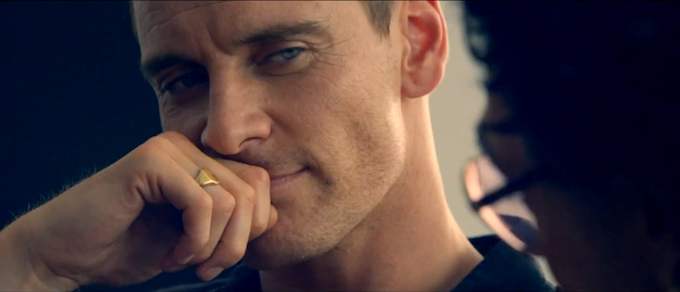
The pretext for Counselor is a story about a lawyer involved in a drug deal gone bad. But a deeper tale is told here, one about the arrogance of the 1% rich male, whose casual callous bravado is shown as stupidity, and whose sense of control is a complete illusion. (How they got to be 1% is another matter; for some it is financial bullying, others hard machismo, and others a leechy sloth, playing off other people's wealth. The men in this film seem to combine all of these lovely traits.)

 Fassbender. Pitt. Bardem. Diaz. Cruz. An all-star cast, and they each do their job well. Bardem and Pitt especially play off previous roles to misdirect the viewer. These are all strong men, and yet they are, one by one, made weak and brought down by a woman who loves to hunt.
The "Counselor" turns out to be the one who needs counsel, and he gets it elegantly from several sources. A diamond-seller (Bruno Ganz), referring cryptically to a gem as cautionary, says, "Why do we adorn beauty? Because we know it is fragile, and yet we also know that this fragility is noble."

What is this overconfident lawyer to do when he is in trouble? He is already past that crossroads, he is told by a philosophical drug lord (Ruben Blades), and cannot go back and recreate the world that existed prior to his choices. "When you know that your reality must die," he offers, "your view of death changes."

The end is a surprise, because of its quietness, and lack of the usual Hollywood showdown. There is enough fighting, gore, and shoot-em-up to go around, but after so many of the don't-know-when-to-quit variety action films recently, I expected a crescendo rather than a diminuendo to the finish.
 The end is also indirect, another welcome change to the usual storytelling methods. There is a CD, but what is on it? The viewer is left to work that out (to its fairly horrible conclusion), but this can only be done if close attention has been paid to the dialogue.
There is a tale here of female ascendancy. The Cleopatra-like eyes of the villain-


Importantly, this tigress also does it with sex. She masters her male victims and slowly strangles them in their own nets. The trip wire is a repeated visual, though used for much more sinister purposes here. People are beheaded and strangled, blood spurting. But far before that, she had already attached herself and wound her way around them. She does the same to the viewer. We at first take her for a bimbo, a party-favor, part of the poolside show. She fucks a car; Fassbender asks, "Why are you telling me this?" Bardem doesn't even know, but he knows he is scared by her. He describes her against the windshield of his car as some sort of sea animal, with suction. This is not simply a circus act. It is what she does.

Is she some sort of avatar for all those who have been taken advantage of by those with power and status? Is she an incarnation of the unholy impulse for revenge? A prophecy of retributive justice against the stupidity of the patriarchal system that includes priests, kings, lawyers, and the doe-eyed women who prop them up? Or simply an acknowledgment of a primal (sexual) urge within all of us for the hunt, something that we as humans never fully escaped from our evolutionary past?
Sam Spruell (tough-as-nails criminal, the one who springs the trip-wire), Bruno Ganz (who played Adolf Hitler in Downfall) and Ruben Blades (reminiscent of the Godfather) all deserve mention for turning in fantastic performances in supporting roles. Without them this film would be less than half of what it is. They give the film its philosophical heft and visceral power; they bring to life Cormac McCarthy's poetry and imagery.

 |
| Friedrich Nietzche |
Counselor is said to be Nietzchean and nihilistic. It is true that the characters' viewpoints are amoral, and McCarthy's work clearly trends that direction. (Unlike so many movies lately with trite titles such as "Into Darkness," this one really is about the darkness, and about our greed and the choice to enter that darkness.)
Nietzche's Beyond Good and Evil and Thus Spake Zarathustra are meditations on what it might mean to honestly re-create our values as human beings. What must be rejected and destroyed, in order to get there? This is more than mere negation of value; it is the encouragement of honest engagement with our values.
Perhaps we do not have to do the destroying; those who choose the path of darkness will destroy their own. Ultimately we are spared the brutal dire consequences that the characters in the film face. We are left to walk out of the theater, out of the story, to re-enter a world of our own choices, seeing that they still lie before us. In this sense Nietzche still speaks to us through films and stories like Counselor. Can we hear what is being said, or do we ignore it and go about our business? Cormac McCarthy and Ridley Scott at any rate seem to be saying, take heed.